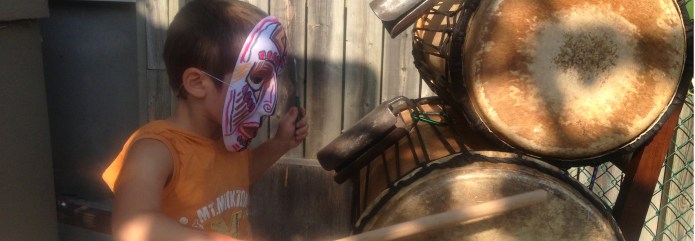
FREE West African Drumming Workshop Jun 11 2:00 PM

West African Drumming Workshop open to kids and their parents!
June 11 2016 2:30pm-3:30pm at the KIDS’s STAGE, Dundas West Festival

MusiCamp is hosting a free hands-on drumming workshop at the Dundas West Festival this Saturday, June 11 2016. Taught by AnnA Melnikoff, one of Canada’s foremost experts in the Mande drumming tradition, a tradition which predates the division of West Africa into the current political regions and arguably represents the roots of African American music, including the Blues, Rock & Roll, R&B, Mowtown, Funk, Soul, and many forms of pop music.
 

This goes way beyond a drum circle! West African Drum instructor Anna Melnikoff will teach workshop participants patterns and licks on djembe (as seen briefly in the video to your left). But Anna will also demonstrate the interlocking patterns on the dunun – the soul of the West African Mande drumming tradition. These rhythms can be extremely challenging, even for pro drummers! And with Anna’s guidance, this workshop is set up to engage and teach the absolute inexperienced while at the same time provide on-going challenges for advanced drummers.


In this workshop kids will:

  • learn the difference between 3 basic slaps (slap, tone & bass) on the djembe
  • have a chance to practice these on the drum with a fun etude that develops these rudiments
  • have a chance to play the dunun
  • learn a basic accompaniment pattern
  • have a chance to solo
And we’ll even do some singing! Have listen to us at last year’s Dundas West Festival.


NOTE: To ensure a spot sign up earlier in the day at the MusiCamp booth located next to the stage, at 1525 Dundas St W, Toronto, ON, just East of Dufferin.


The video to your left is from MusiCamp’s West African Drumming week in 2013. (Note: If you want to hear the groovy bass you’ll have to use headphones.)

Mande drumming is based on three stand-up drums called the dunun that play three interlocking rhythms often thought of as the melody. The djembes play accompanying patterns on top of this and are also used for soloing. To learn more about the Mande drumming tradition follow this link or if you are interested in our West African Drumming summer camp click here.


Georgian Polyphony & Young Voices of Toronto

Sunday June 5 2016 3:30 PM
Jeanne Lamon Hall in Trinity-St. Paul’s United Church, Toronto
Colour Me Spring Concert
by Young Voices of Toronto featuring Georgian Polyphony.

 
For months now, MusiCamp has been workshopping Georgian Polyphony with one of Toronto’s best children’s choruses, Young Voices of Toronto (YVT). And on June 5, they team up with ZARI and the Makharashvili family to present a set of traditional Georgian polyphony.

YVT, formerly known as High Park Choirs, is the Children’s Choir-in-Residence at the University of Toronto. Under the artistic directorship of Zimfira Poloz, YVT is known for its professional, diverse and unique choral programs.

ZARI is a trio that exclusively sings Georgian polyphony and features MusiCamp director Andrea Kuzmich. The Markharashvili Family is Andrea Kuzmich’s family singing Georgian songs. You can hear them singing with Basiani, one of Georgia’s acclaimed state folk ensembles here.

YVT

 
Doors Open at 3 pm.

Show starts at 3:30 pm and runs approximately 2 hours

$25 adults, $15 youth and seniors, children 5 and under free

Tickets can be purchased here


Diddley Bow Song

Must Hear! Especially the ending!!
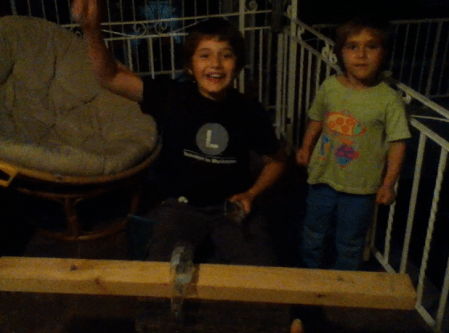
Diddley Bow Song from the Rhythm & Stuff week at MusiCamp 2015.


A large part of MusiCamp is making instruments and the tin-can-2X4 diddley bow featured in this post is just one type of instrument campers can choose to make during their week at MusiCamp. This past week, these three campers decided to really explore the playing of the instrument and in particular drew from the instrument’s African origins. They based this song off of a Malawian song we heard from another Youtube video that discusses the history of the diddley bow – and it was so much fun to figure out and then play – and these guys did a great job getting the groove! Have a listen to them and make sure you listen to the end to hear their singing!


Malawi was probably used as an example in “The History of the Diddley Bow” video because Malawians were and are so successful at using recycled containers as resonators for homemade instruments and then creating music that is exciting and fun yet distinctly Malawian. I spent a few years in Malawi in the 1990s and especially recall the Malawian Chibuku beer box guitar!


The diddley bow, as seen in the above video, with tin resonator attached to wooden 2X4, is believed to be an African American origins, though it is related to many different instruments found around the world, like the andibidi from the Congo, the umakweyana of West Africa, the dan bau of Vietnam, the gobichand of India. More information on instrument making at MusiCamp can be accessed here.


By the way, in case you are wondering, the Rhythm & Stuff week was originally scheduled as West African Drumming Camp; however, because we didn’t have enough registrants (we needed 7 registrants to run the drumming) we ran an alternative program that involved lots of rhythm fun, including lots of body percussion as well as beatboxing, rhythm games and some hand drumming and singing.


THE BLUES: From Shouts to 12 Bars

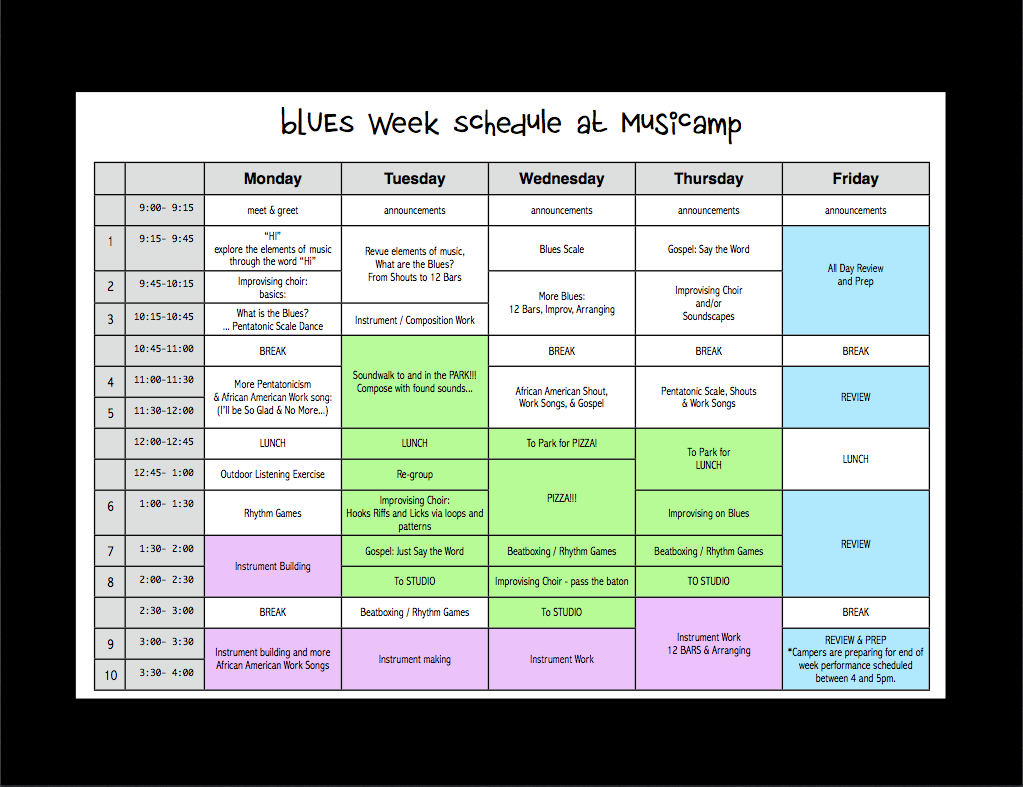
From great rock ‘n’ roll legends like Mick Jagger of the Rolling Stones, to pop divas like Beyonce or Katy Perry – they all know THE BLUES. And so should you!


Blues is the root of all popular music and Blues Camp exposes campers to the rhythmic and melodic feels and harmonic frameworks of The Blues through groovy gospel tunes, African American shouts and work songs, the pentatonic scale as well as the blues itself – from its swingin’ roots to present day Soul and R&B.
And we’ll do this along with the tonne of musical games, beat boxing, body percussion and other fun-in-the-park activities we do every week.

Campers will:

  • build and compose on their own instruments (and explore some ideas about acoustics)
  • learn and improvise on the pentatonic scale, African American shouts, and work songs
  • vocalize the blues rhythms with beatboxing, feel the grooves with body percussion and hear the chord progressions with singing and instruments playing
  • write lyrics to, compose, improvise and sing over 12-bar blues and its derivatives.

While we do lots of vocal based activities, campers who already have instrumental experience are welcome to bring their instrument for this week and explore the blues instrumentally as well.

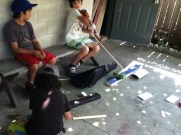
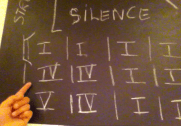
From the pictures above you can see some campers making diddley bos and bucket basses. The diddley bo is the precursor to the slide guitar and you click the picture below to see how bluesy it sound!. For more info on bucket basses click here.

Check out our Gallery for more pictures of previous camps!

.


Roots Music Camp

Special guest artist for this week includes acclaimed singer / song-writer / banjo player / fiddler Hannah Shira Naiman!

Drawing from old time and Appalachian musics, bluegrass, shaped note singing, and other folk musics from North America as well as the English and Celtic traditions, Roots Music Week is all about group singing and playing folk songs. While there is always room for those who just want to sing, this week we welcome campers to bring their fiddle, guitar, ukulele, or banjo – or we can arrange the rental for those following a new found interest on one of these instruments. Guest artist co-leading the week is acclaimed singer/banjo/fiddler/song writer Hannah Shira Naiman, who happens to also be a professionally trained dancer, so there’s a chance we’ll also be doing a little jigging, clogging or square dancing! As we do in every week, we’ll also be making an instrument and visiting Dufferin Grove park for pizza days and other outdoor activity. The week will end with a coffee house style performance that parents and friends are invited to attend.

No previous training required. But those with skills on or ambition to play violin/fiddle, guitar, ukelel, or banjo will want to consider this week!

Check out our MusiCamp Flickr Gallery for more pics of MusiCamp

Making a Washtub Bass at MusiCamp?… hmm…

As I mentioned in previous posts, MusiCamp was considering the possibility of campers making washtub basses as well as diddley bos this summer. So, this past Victoria Day my partner and I attempted to make a washtub bass.

For those of you who don’t know, a washtub bass is a one-stringed bass made up of a stick, a string, and an overturned washtub as the resonator (or better understood as what amplifies the sound of the plucked string).

Tin olive oil container on left and 5 gallon plastic bucket on right.

We tried two different containers (the resonator of the instrument), two different strings, and a variety of playing techniques. While we quickly resolved what physical equipment (resonator and string) worked best, the playing techniques is clearly a work in progress ;) .

One container was a food-industry size oil container. It was metal and so I figured it would resonate more like a traditional washtub than the other alternative resonator, the 5 gallon plastic bucket. But the plastic bucket had a way fuller sound and the one we much preferred.

The two strings we tried was a cotton rope and a plastic weed-wacker line. We liked the rope more but it busted before we even got a chance to properly savour the sound. Luckily, the sound of the weed-waker line wasn’t dramatically different from the rope.

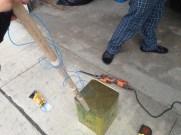
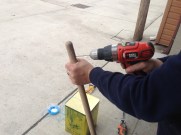
The construction simply involved taking a rake or broom handle, indenting a groove on one end and drilling a hole in the other. We also drilled a whole in the middle of the container/resonator. We then tied the one end of the weed-waker line to the container/resonator and the other end to the stick (which involved wrapping it around the stick a number of times and then securing it with duck-taped). Then we inserted the groove/indent on the rim of the bucket, the string becomes taught, and we started to twang away.

I had assumed that playing different pitches/notes involved moving the stick back and forth; however, this seemed very difficult to keep in tune -as you can see in the youtube video below.

The playing technique that I soon adopted involved placing the stick a little closer to the centre of the bucket and using my fingers (usually just the index finger or the whole hand) to pitch the notes as well as moving the stick.

So, while I still need to work on the bass playing technique and possibly experiment with the instrument design to help secure the stick a little more (and thereby the intonation of the pitches/notes I play!) it is quite a simple thing to make and it makes a great bass sound!

Final say on the wash tub bass at MusiCamp? It’s definitely going to happen. I.e., if campers want to make one, it is very possible!

The Blues Camp 2014

THE BLUES: From Shouts to 12 Bars  $225

July 7 – 12, 9 am – 4 pm (extended care available)

Pics from The Blues week 2013

Besides the tonne of musical games and other fun-in-the-park activities we do every week, Blues Camp 2014 explores the roots of the blues through the pentatonic scale, African American shouts, work songs and gospel tunes as well as the blues itself – from its swingin’ roots to present day R&B.

Campers will also:

  • build and compose on their own instruments (and explore some ideas about acoustics)
  • learn and improvise on the pentatonic scale, African American shouts, and work songs
  • vocalize rhythms and chord progressions of the blues
  • write lyrics to, compose, improvise and sing over 12-bar blues.

From the pictures above of Blues week 2013 you can see some campers making Diddley Bos (the precursor to the slide guitar). The plan is to make more of those this year but we’re also toying with the idea of building modified washbasin basses! We’ll be taking some time during March break to experiment and see if it’s doable.

In the meantime, click the picture below and have a listen to what a Diddley Bo sounds like (it’s so bluesy):

Screen Shot 2014-02-10 at 1.42.01 PM

Check out our Gallery for more pictures of previous camps!

.