MusiCamp at the Dundas West Festival 2016!

MUSICAL PROGRAMMING FOR KIDS AND BY KIDS
ALL IN THE HEART OF THE KIDS ZONE

FREE AFRICAN DRUM & BODY PERCUSSION WORKSHOPS
CRAFTS by KOSA KOLEKTIV
MEET MUSICAMP INSTRUCTORS
LIVE MUSIC BY YOUNG LOCAL PERFORMERS

We are so so so excited to be part of the vibrant Dundas West community that puts on such an amazing festival. MusiCamp is curating the Kids Stage again, providing more workshops, hosting crafts by Kosa Kolektiv and this year we’ll be smack in the middle of the kids stage, located at 1525 Dundas St West, just west of Dufferin.

BODY PERCUSSION WORKSHOP 11:45 am – 12:30 pm

clap handsLed by MusiCamp Director Andrea Kuzmich and aided by young MusiCampers themselves, the event will demonstrate some pieces that use body percussion and then proceed to teach the audience short cells of body percussion that can be built upon each other and layered ontop of each to create some cool grooves.

WEST AFRICAN DRUMMING WORKSHOP 2:30 pm to 3:30 pm

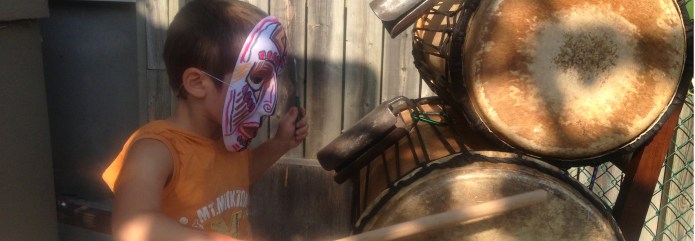
This goes way beyond a drum circle! MusiCamp’s West African Drum instructor Anna Melnikoff will teach workshop participants patterns and licks on djembe (as seen briefly in the video to your left) and the interlocking patterns on the dunun – side-playing drums.
More info can be found on this post.
 

LIVE MUSIC BY LOCAL YOUNG PERFORMERS 11 am – 4:30 pm
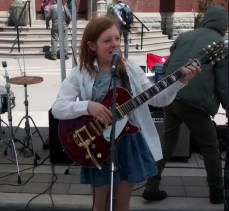
BrighidFry At DuWestFest

From 11 am to 4:30 pm the stage, when not presenting percussion workshops, will be filled with live music. This year we welcome back sweet songsters Brighid Fry, The Moir and Tollar Girls, and Rebekah Wise. MusiCampers will also be performing – a host of blue grass tunes and some African American work songs.

And we also have some new performers as well. We are very excited to welcome Young Voices Toronto (formerly the High Park Choir) to the stage YVTwith their Chamber Choir, many of whom live in or so close the Dundas West Community. Be prepared to be inspired by this choir of 8-11 youth, whose sweet voices and sensitive tuning perform music from around the world. We also have songsters Marlowe Dondertman, Lia Ashkenas, and the Rock Band Kingdom of the Birds joining the stage.


CRAFTS BY KOSA KOLEKTIV
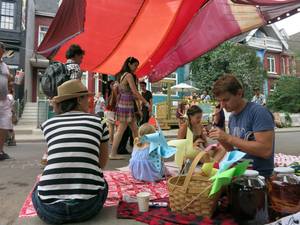
Kosa craftsMid day, the spirited Kosa Kolektiv will be hosting some folk crafts in the MusiCamp tent, located just next to the stage. They will be also promoting Folk Camp, an all-ages Folk camp in Grafton (on Lake Ontario) where a wide array of workshops will be available – from print, mask, and instrument making, to Georgian, Ukrainian and other forms of singing, to canning and medicinal herb foraging.


A REMINDER

Don’t forget to bring sun screen, sun hats and water bottles! Also, the Kids Stage is located at 1525 Dundas St W, just West of Dufferin.  WE LOOK FORWARD TO SEEING YOU THERE!
 

FREE West African Drumming Workshop Jun 11 2:00 PM

West African Drumming Workshop open to kids and their parents!
June 11 2016 2:30pm-3:30pm at the KIDS’s STAGE, Dundas West Festival

MusiCamp is hosting a free hands-on drumming workshop at the Dundas West Festival this Saturday, June 11 2016. Taught by AnnA Melnikoff, one of Canada’s foremost experts in the Mande drumming tradition, a tradition which predates the division of West Africa into the current political regions and arguably represents the roots of African American music, including the Blues, Rock & Roll, R&B, Mowtown, Funk, Soul, and many forms of pop music.
 

This goes way beyond a drum circle! West African Drum instructor Anna Melnikoff will teach workshop participants patterns and licks on djembe (as seen briefly in the video to your left). But Anna will also demonstrate the interlocking patterns on the dunun – the soul of the West African Mande drumming tradition. These rhythms can be extremely challenging, even for pro drummers! And with Anna’s guidance, this workshop is set up to engage and teach the absolute inexperienced while at the same time provide on-going challenges for advanced drummers.


In this workshop kids will:

  • learn the difference between 3 basic slaps (slap, tone & bass) on the djembe
  • have a chance to practice these on the drum with a fun etude that develops these rudiments
  • have a chance to play the dunun
  • learn a basic accompaniment pattern
  • have a chance to solo
And we’ll even do some singing! Have listen to us at last year’s Dundas West Festival.


NOTE: To ensure a spot sign up earlier in the day at the MusiCamp booth located next to the stage, at 1525 Dundas St W, Toronto, ON, just East of Dufferin.


The video to your left is from MusiCamp’s West African Drumming week in 2013. (Note: If you want to hear the groovy bass you’ll have to use headphones.)

Mande drumming is based on three stand-up drums called the dunun that play three interlocking rhythms often thought of as the melody. The djembes play accompanying patterns on top of this and are also used for soloing. To learn more about the Mande drumming tradition follow this link or if you are interested in our West African Drumming summer camp click here.


Georgian Polyphony & Young Voices of Toronto

Sunday June 5 2016 3:30 PM
Jeanne Lamon Hall in Trinity-St. Paul’s United Church, Toronto
Colour Me Spring Concert
by Young Voices of Toronto featuring Georgian Polyphony.

 
For months now, MusiCamp has been workshopping Georgian Polyphony with one of Toronto’s best children’s choruses, Young Voices of Toronto (YVT). And on June 5, they team up with ZARI and the Makharashvili family to present a set of traditional Georgian polyphony.

YVT, formerly known as High Park Choirs, is the Children’s Choir-in-Residence at the University of Toronto. Under the artistic directorship of Zimfira Poloz, YVT is known for its professional, diverse and unique choral programs.

ZARI is a trio that exclusively sings Georgian polyphony and features MusiCamp director Andrea Kuzmich. The Markharashvili Family is Andrea Kuzmich’s family singing Georgian songs. You can hear them singing with Basiani, one of Georgia’s acclaimed state folk ensembles here.

YVT

 
Doors Open at 3 pm.

Show starts at 3:30 pm and runs approximately 2 hours

$25 adults, $15 youth and seniors, children 5 and under free

Tickets can be purchased here


Lecture on Georgian Polyphony

Andrea Kuzmich, MusiCamp’s director, is guest lecturing at Ryerson University, for the Traditional Musics of the World Course.

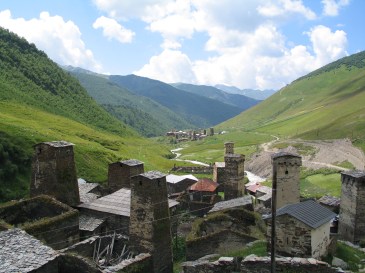
Georgia, is located in the mountainous region of the Caucasus, the crossroads of Europe and Asia. Its ancient singing tradition, known for its distinctive and haunting harmonies, was recognized by UNESCO as an intangible masterpiece of humanity in 2001. The 3-part form defies Western conventions and comes in a plethora of musical dialects, reflecting the diverse geographical and cultural makeup of the land.
This hour-long lecture will introduces traditional singing practices of Georgia by exploring the variety of polyphonic singing styles through musical examples (audio and video) as well descriptive analysis. It will also reflect on how the practices figures into the region’s historic, geographic and cultural contexts.

Guest Lecture on Georgian Polyphony by Andrea Kuzmich
For the Traditional Musics of the World Course
POD 368, Ryerson University
Cost: Free.

6-week Georgian Singing Workshop

A 6 Week Workshop led by Shalva Makharashvili and Andrea Kuzmich
MONDAYS 7 – 9 PM April 11 – May 16 2016
at the MusiCamp studio
$240 for new participants; $200 for repeat students
More info or register by email through our contact page

The picture above is of workshop leader Shalva with his children singing with Basiani, one of Georgia’s acclaimed state folk ensembles. Have a listen to them here.

IMG_1558Take part in a Georgian singing workshop and join the thousands of voices before you that have contributed to this millennia-old folk tradition. Georgia, is located in the mountainous region of the Caucasus, the crossroads of Europe and Asia. Its ancient singing tradition, known for its distinctive and haunting harmonies, was recognized by UNESCO as an intangible masterpiece of humanity in 2001. The 3-part form defies Western conventions and comes in a plethora of musical dialects, reflecting the diverse geographical and cultural makeup of the land.

Canada’s foremost experts in Georgian polyphony, Georgian-born singer/multi-instrumentalist Shalva Makharashvili and Andrea Kuzmich, will be leading the workshop. In this series, we’ll take a look a variety of regional styles and song-types (work/travel/table/love songs and chants). At the end of the 6 weeks we’ll have a little performance for friends and family… and a little toast – to keep it in the Georgian tradition…

For some samples of Georgian songs have a listen to Shalva’s and Andrea’s trio soundcloud playlist

To register for the workshop send us an email through the contact us page.


Instrument Making at MusiCamp

Yes, these are real, playable instruments. They aren’t toys or kids’ versions. They are still played today and have an interesting social history worth telling. But best of all, they are fun to play and are excellent pedagogical tools for teaching musical concepts of tonality and harmony.


The Diddley Bow

The diddley bow is the instrument featured in the picture above on the left. As you can hear and see in the video below, the diddley bow is played with the neck of a glass bottle and a stick (though at MusiCamp we replace the glass bottle with a copper washer, it’s a little less dangerous). The result is very bluesy! No wonder the diddley bow is considered the precursor to the slide blues guitar.

The diddley bow is related to many different instruments found around the world (like the andibidi from the Congo, the umakweyana of West Africa, the dan bau of Vietnam, the gobichand of India). But this particular set up, a metal string expanded over wooden 2X4 (it used to be the wall or beam of house) with a metal or glass resonator, is of African American origin and emerged out of  the ugly social and economic conditions of slavery in the Southern United States.

More pictures of the diddley bow construction at MusiCamp can be found here.

The Bucket Bass

The featured image at the top of this post show three campers building/painting their bucket basses.

Below is a video of Andrea, MusiCamp’s director, and her son performing In The Highways Of The Hedges with the bucket bass. NOTE, you need headphones or good speakers to hear the bass because laptops and mobile devices tend to cut out the bottom end.

The bucket bass, closely related to the washtub or tea-chest bass, is not so different from the diddley bow. Both are one-stringed instruments and vary the tension on the string to alter pitch. The emergence and use of either the bucket, the washtub or the chest as a resonator is similarly linked to conditions of economic hardship.

For more information about the construction of the bucket bass visit our earlier post about making a washtub bass.

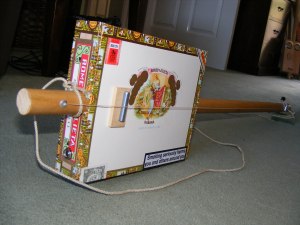
Cigar Box Diddley Bow

In 2015 we started making cigar box diddley bows as well (picture below).

cigarbox diddleybow

6-week Georgian Singing Workshop

A 6 Week Workshop led by Shalva Makharashvili and Andrea Kuzmich
THURSDAY 7-9 PM February 4 – March 10 2016
at the MusiCamp studio
$240 for new participants; $200 for repeat students
Register by email through our contact page

IMG_1558Take part in a Georgian singing workshop and join the thousands of voices before you that have contributed to this millennia-old folk tradition. Georgia, is located in the mountainous region of the Caucasus, the crossroads of Europe and Asia. Its ancient singing tradition, known for its distinctive and haunting harmonies, was recognized by UNESCO as an intangible masterpiece of humanity in 2001. The 3-part form defies Western conventions and comes in a plethora of musical dialects, reflecting the diverse geographical and cultural makeup of the land.
Canada’s foremost experts in Georgian polyphony, Georgian-born singer/multi-instrumentalist Shalva Makharashvili and Andrea Kuzmich, will be leading the workshop. In this series, we’ll take a look a variety of regional styles and song-types (work/travel/table/love songs and chants). At the end of the 6 weeks we’ll have a little performance for friends and family… and a little toast – to keep it in the Georgian tradition…

* If you are interested, let us know what evening works best for you and we’ll try to best accommodate your availability.For some samples of Georgian songs have a listen to Shalva’s and Andrea’s trio soundcloud playlist

To register for the workshop send us an email through the contact us page.


Diddley Bow Song

Must Hear! Especially the ending!!
Diddley Bow Song from the Rhythm & Stuff week at MusiCamp 2015.


A large part of MusiCamp is making instruments and the tin-can-2X4 diddley bow featured in this post is just one type of instrument campers can choose to make during their week at MusiCamp. This past week, these three campers decided to really explore the playing of the instrument and in particular drew from the instrument’s African origins. They based this song off of a Malawian song we heard from another Youtube video that discusses the history of the diddley bow – and it was so much fun to figure out and then play – and these guys did a great job getting the groove! Have a listen to them and make sure you listen to the end to hear their singing!


Malawi was probably used as an example in “The History of the Diddley Bow” video because Malawians were and are so successful at using recycled containers as resonators for homemade instruments and then creating music that is exciting and fun yet distinctly Malawian. I spent a few years in Malawi in the 1990s and especially recall the Malawian Chibuku beer box guitar!


The diddley bow, as seen in the above video, with tin resonator attached to wooden 2X4, is believed to be an African American origins, though it is related to many different instruments found around the world, like the andibidi from the Congo, the umakweyana of West Africa, the dan bau of Vietnam, the gobichand of India. More information on instrument making at MusiCamp can be accessed here.


By the way, in case you are wondering, the Rhythm & Stuff week was originally scheduled as West African Drumming Camp; however, because we didn’t have enough registrants (we needed 7 registrants to run the drumming) we ran an alternative program that involved lots of rhythm fun, including lots of body percussion as well as beatboxing, rhythm games and some hand drumming and singing.


6-week Georgian Singing Workshop Starting May 12 2015

A 6 Week Workshop led by Shalva Makharashvili and Andrea Kuzmich
TUESDAYS 7-9 PM May 12 – June 16 2015
at the MusiCamp studio
$240 for new participants; $200 for repeat students
Register by email through our contact page

 
IMG_1558Take part in a Georgian singing workshop and join the thousands of voices before you that have contributed to this millennia-old folk tradition.Georgia, is located in the mountainous region of the Caucasus, the crossroads of Europe and Asia. Its ancient singing tradition, known for its distinctive and haunting harmonies, was recognized by UNESCO as an intangible masterpiece of humanity in 2001. The 3-part form defies Western conventions and comes in a plethora of musical dialects, reflecting the diverse geographical and cultural makeup of the land.
 
Canada’s foremost experts in Georgian polyphony, Georgian-born singer/multi-instrumentalist Shalva Makharashvili and Andrea Kuzmich, will be leading the workshop. In this series, with wedding season just around the corner, we’ll take a look at some wedding processional songs as well as a host of other songs (work/travel/table/love songs and chants) in a variety of regional styles. At the end of the 6 weeks we’ll have a little performance for friends and family… and a little toast – to keep it in the Georgian tradition…
 
For some samples of Georgian songs have a listen to Shalva’s and Andrea’s trio soundcloud playlist

To register for the workshop send us an email through the contact us page.


Serious Groove at MusiCamp 2013’s West African Drumming Week

This slightly edited video is from our 2013 week-end performance of the children-composed rhythm “Timbaraba.”

Although it is difficult to see, at the back left are 3 double headed drums known as dunun. The dunun play a complex interlocking rhythm upon which the djembes play another rhythm or solo.

NOTE: Because the speakers of computers and portable devices aren’t designed to capture the bass, to hear the dunun pattern you need to listen to this video with headphones or good speakers.