
Finally we get a chance to properly thank you for your incredible support of our fundraiser, Sakartvelo Bound. Your contributions—whether through well wishes, endorsements, financial aid, or labor—enabled us to return to Georgia to study and perform Georgian songs for the first time as a family. Immersing ourselves in the land, traditions, and teachings of the world’s best Georgian singers was transformative. Experiencing the spirit of this musical tradition in the homeland has rejuvenated our passion and commitment to sharing Georgian polyphony. There was also a strange sweetness to witness the many Canadian flags ornamenting so many places and events, and a humbling reminder of our role in representing Canada. But we did Canada proud – as we found ourselves pleasantly surprised to receive so many accolades for our authentic performances of Georgian polyphony, along with invitations for further collaborations in Georgia and with the broader singing communities across Europe. Thank you for making this journey possible!
And in case you are curious, below are many details of our travels and experiences. Hope you enjoy reading about it and please feel free to reach out if you have any comments of questions.
Supras, food, song and toasting…
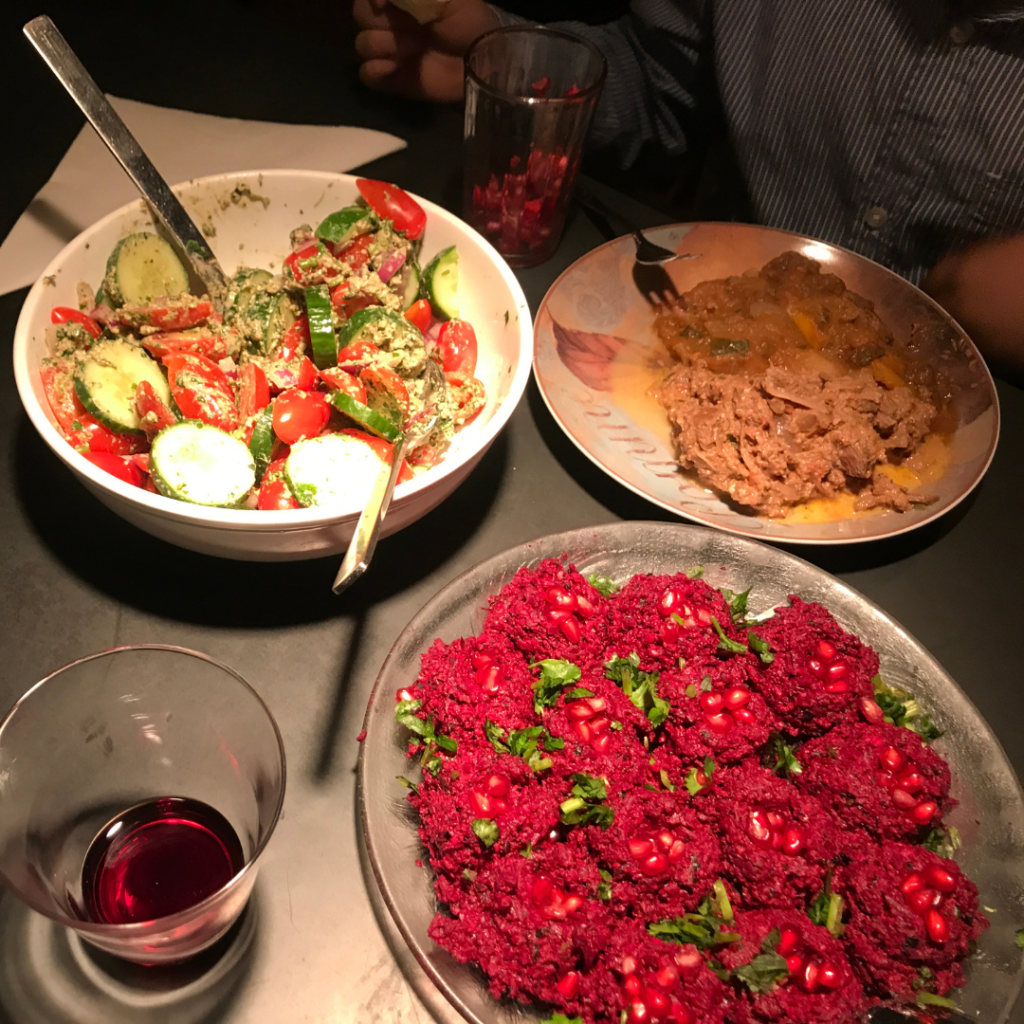
On the first night of Festival Sakartvelo, after a 5+ hour bus ride from the State Folklore Centre in Tbilisi to Ambrolauri in Racha, we were greeted with an unforgettable feast. Fresh meats, vegetables, herbs, spices, and walnuts came together in dishes bursting with distinct flavors. And it didn’t stop there—breakfast, lunch, and dinner were all equally abundant, almost overwhelming in their generosity.
A highlight of the region was Khvanchkara, a unique, exceptionally smooth, and richly dark red wine. Naturally sweet from a blend of grapes that grow exclusively on the north-facing slopes of Racha’s mountains, it was unlike anything we had ever tasted.
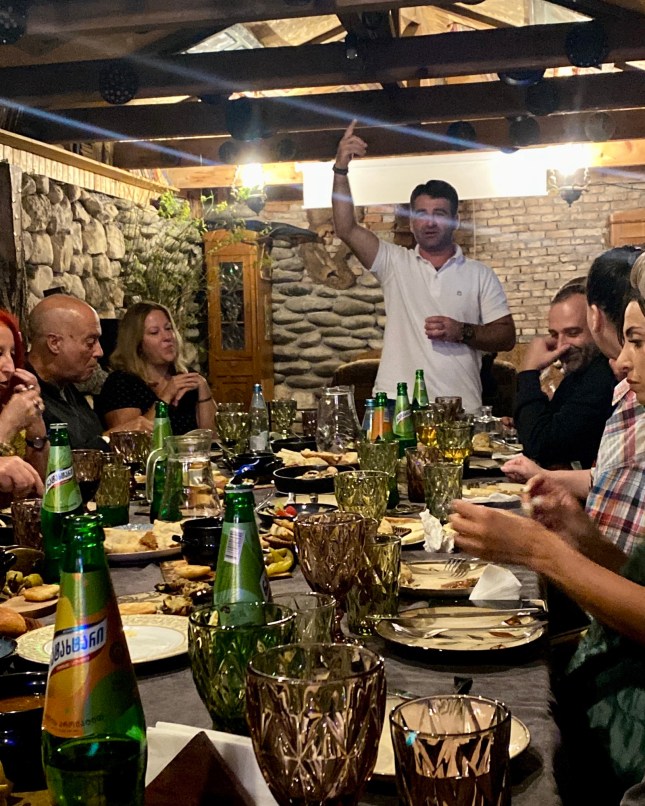
But a supra is much more than food and drink. Toasts anchor the experience, guiding the flow of wine and conversation, as one is not to drink without contributing to the toast. Songs weave through the moments, adding depth and connection. Whether it was an intimate supra with Giorguna as our tamada or the grand feast we shared on the mountain in Lechkhumi, these gatherings were magical and filled not only our bellies but also our hearts.




Lechkumi was like visiting a dream
Our cultural day was in Lechkhumi, a region in north west Georgia known as a wild, remote highland area of the Greater Caucasus mountains. We went to visit the wine estate of the Khmelidze family. We drove for hours, high into the mountains but the marshutka (small bus) couldn’t make it all the way to the top, and we had to walk the rest of the way. When we got there, it was like visiting a dream.
It was unbelievably picturesque. (I leave it to the pictures below to better describe.) But it wasn’t time to bask in the beauty. Our day was filled with a singing/dancing workshop, wine tasting, a Lechkumi cuisine demonstration, a dance performance and, of course, a supra.
Tornike Skhiereli, the leader of Dziriani taught all the participants, including the administrators, the song Raeo. How epic it was – all of us singing and dancing on the top of the mountain. (Check out the video below in the learning from Dziriani section)
The Khmelidze family has been making wine in small batches for over 200 years. The process involves the wine gestating in a qvevri, a large egg-shaped earthenware vessel that is buried in the ground for at least 8-9 months. We tasted 3 different wines, all of which were amazing. And then after, or maybe during, we broke out into song and dance, right on top of where the next batch of wine was gestating. Levan Khmelidze, the patriarch of the estate, was so pleased, suggesting that so much singing would make his wine taste even better.
Of course the singing didn’t end then. It carried on into the Supra, which looked like something out of a fairy tale: two long tables, ladened with Georgian food and the tasty Khmelidze wine, stretching out, overlooking the mountains.

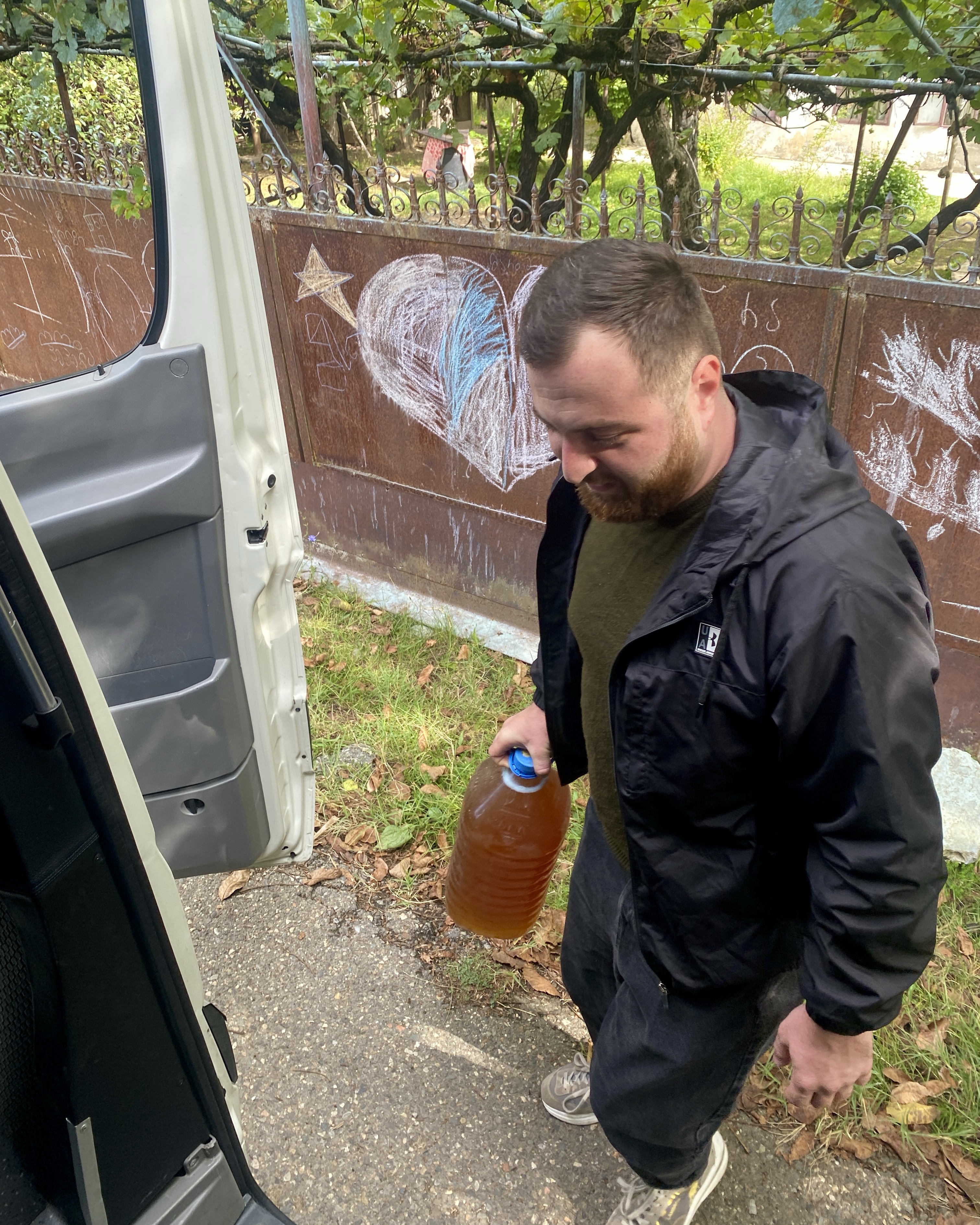
Iuri, from Dziriani stopping off at his home to grab some wine along 
and some lobiani that his mom made! Yum! 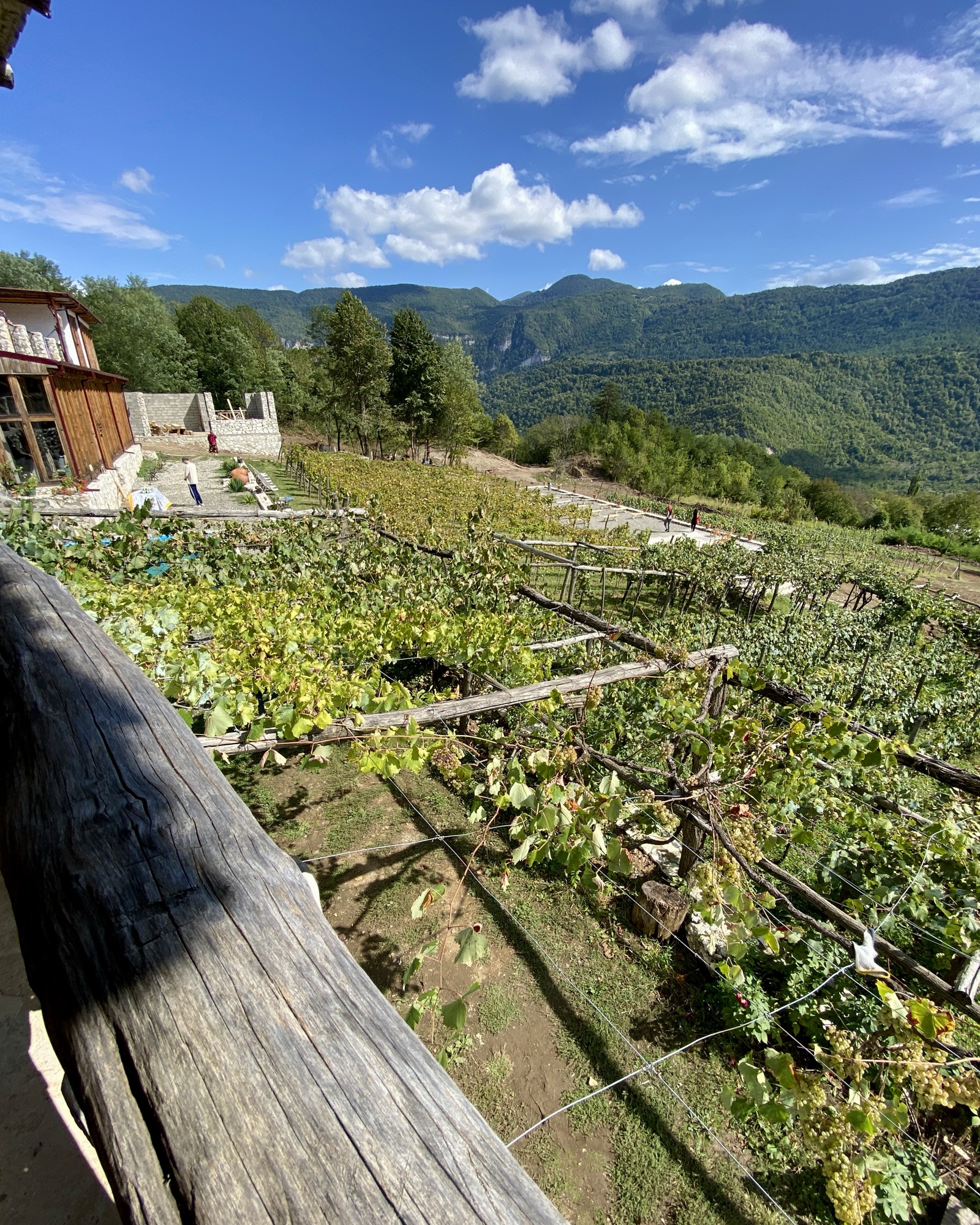
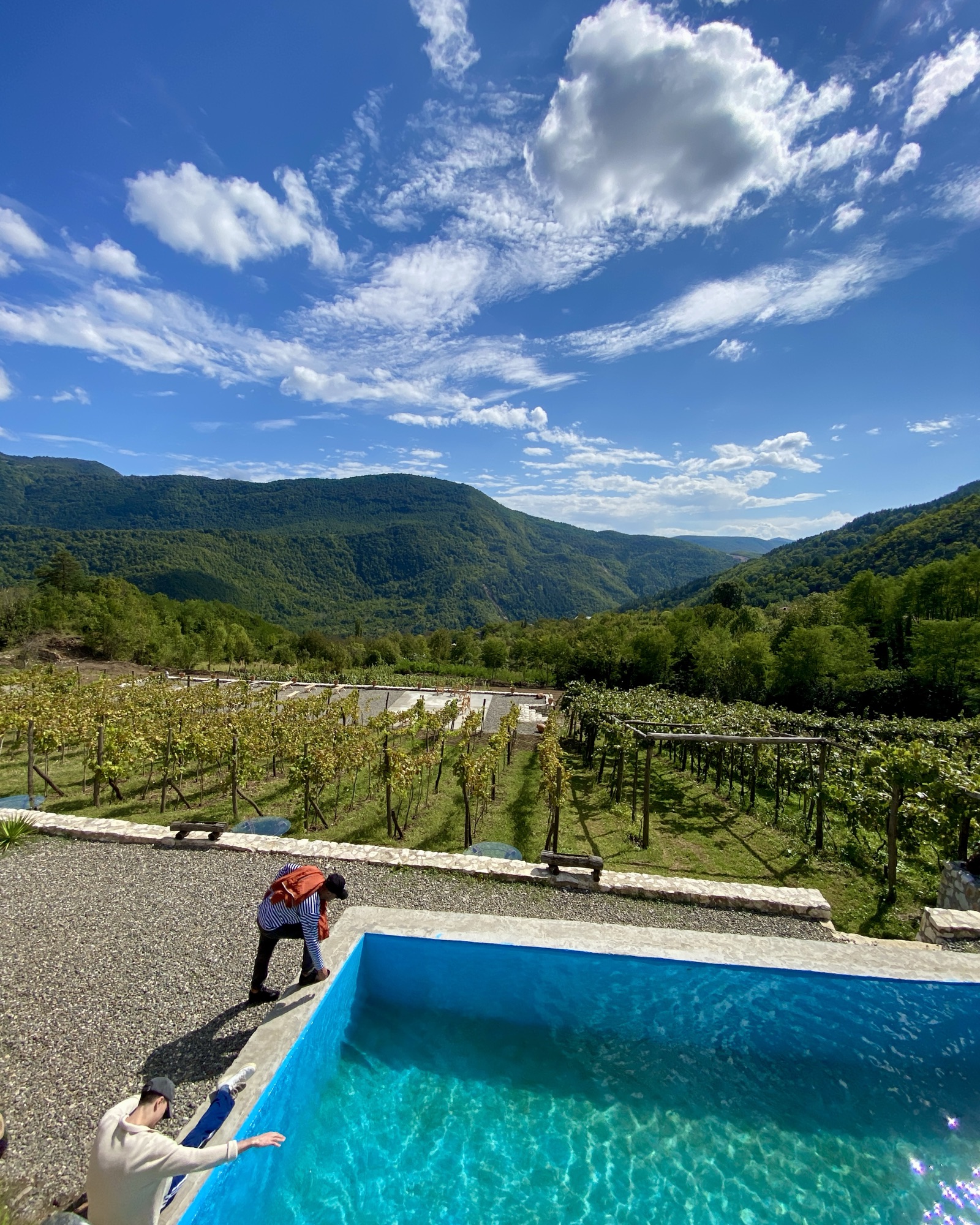

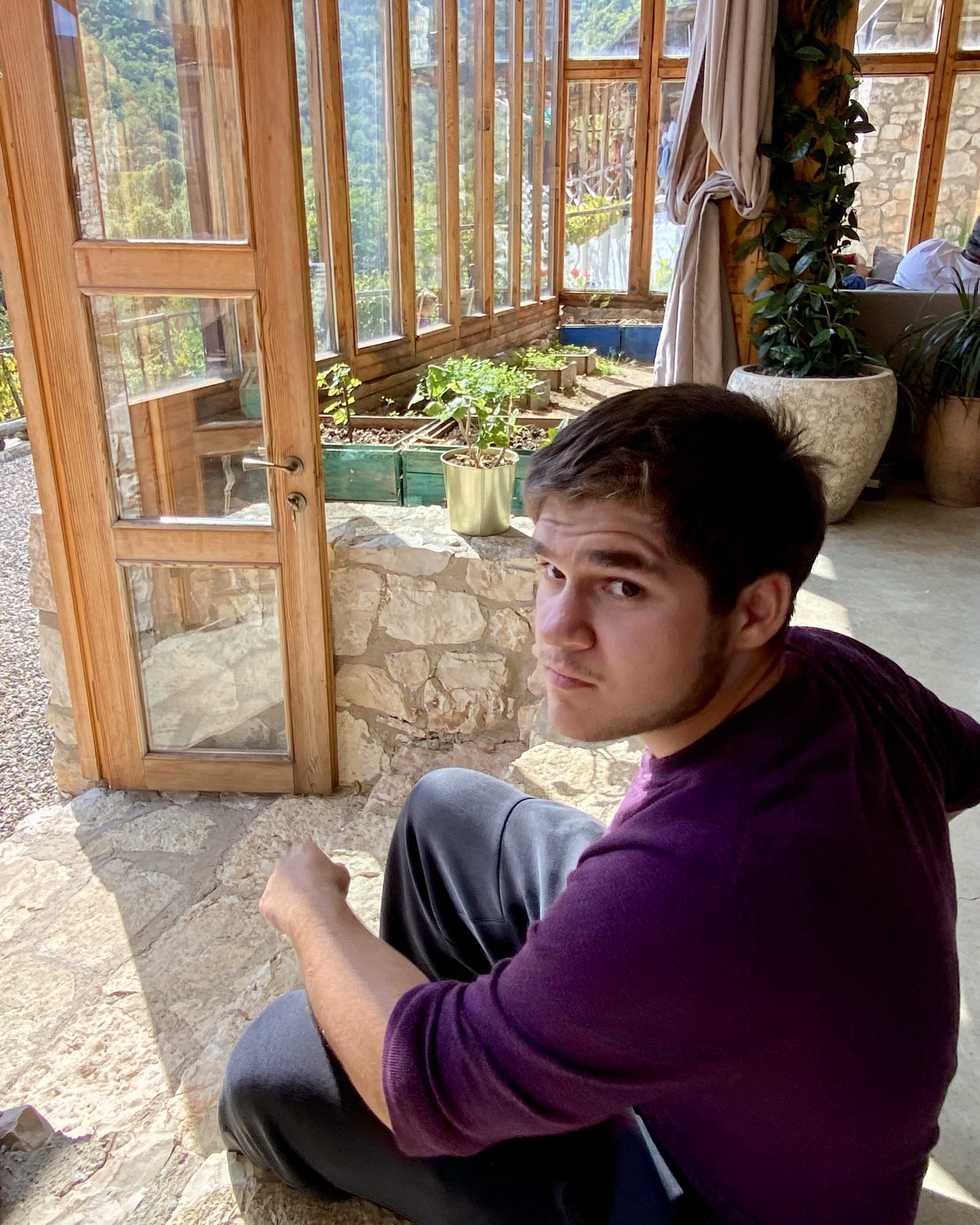
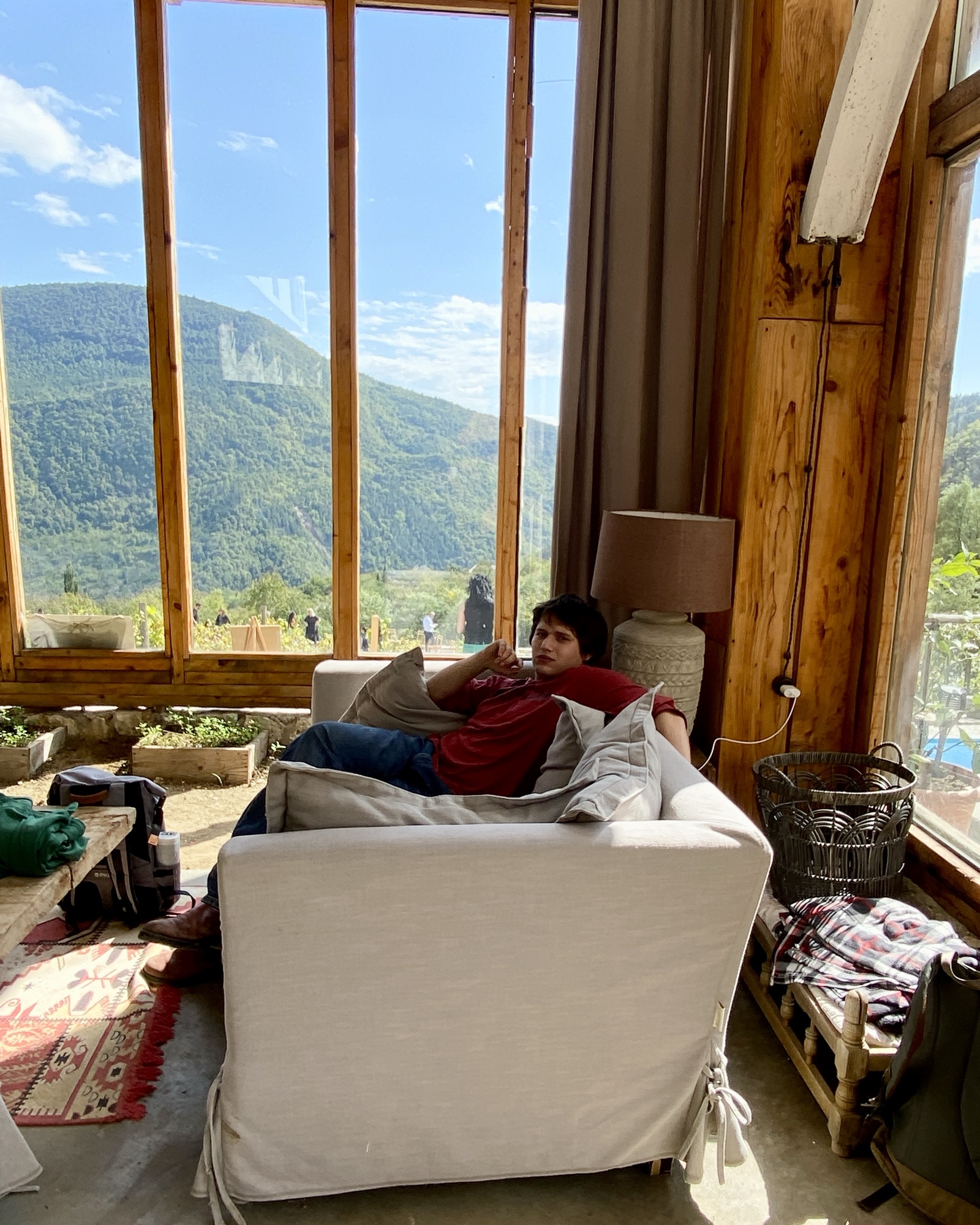
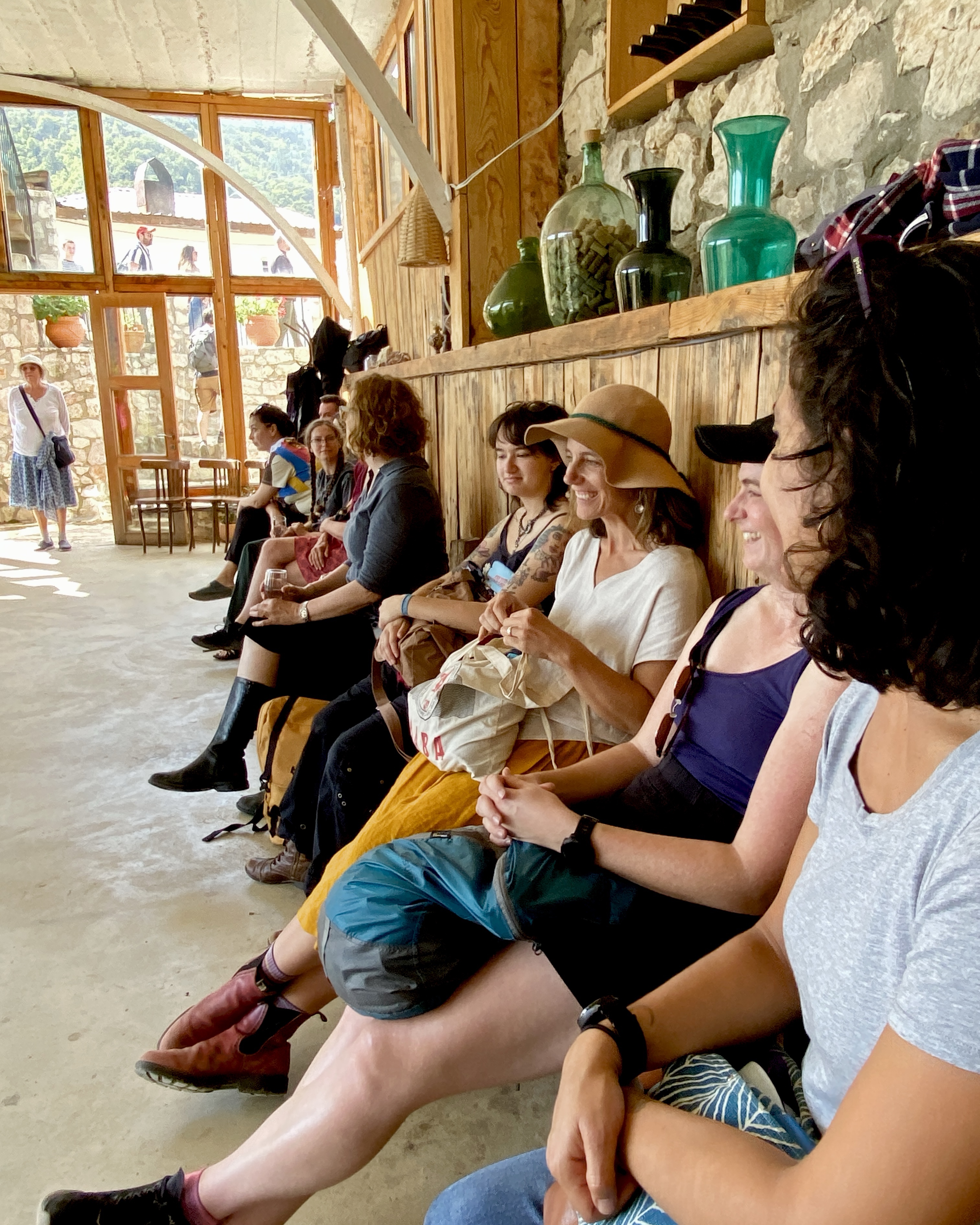

under each of those metal spheres lies a kvevri underground, a huge clay pot where the wine brews… it’s an 8000 year old Georgian tradition! 
and it makes such good wine! 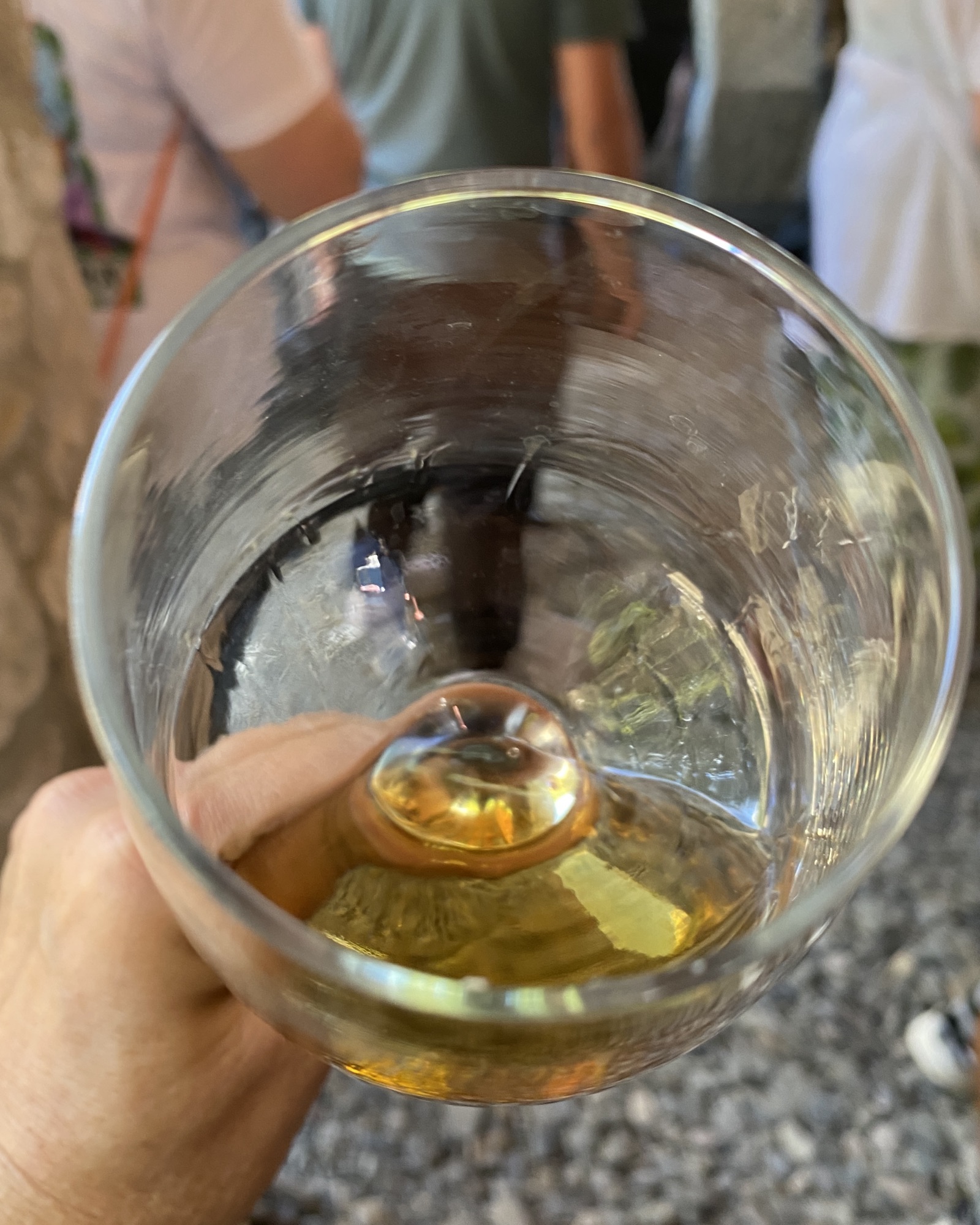


we were just about to learn a dance song 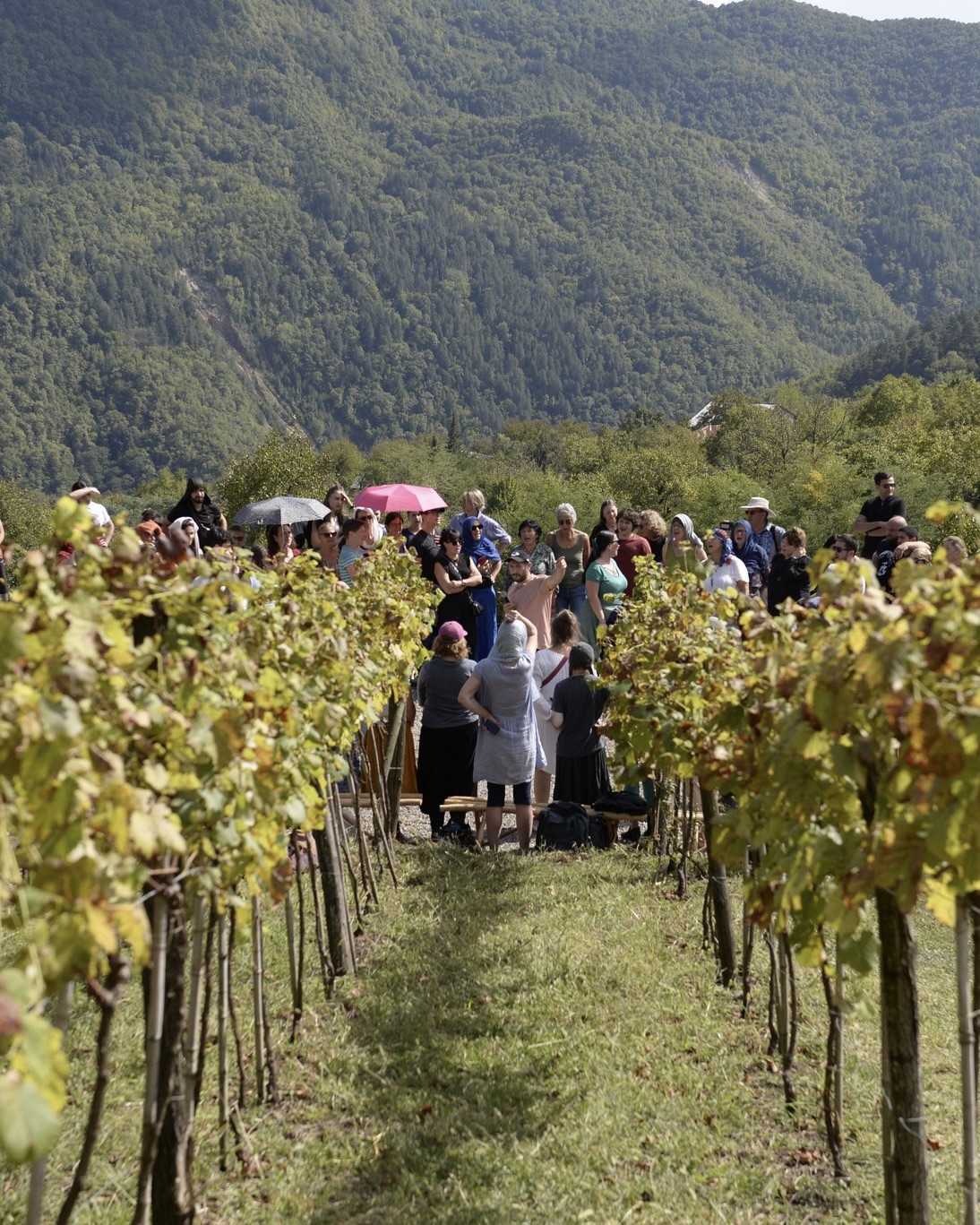

workshop on Racha’s cuisine 


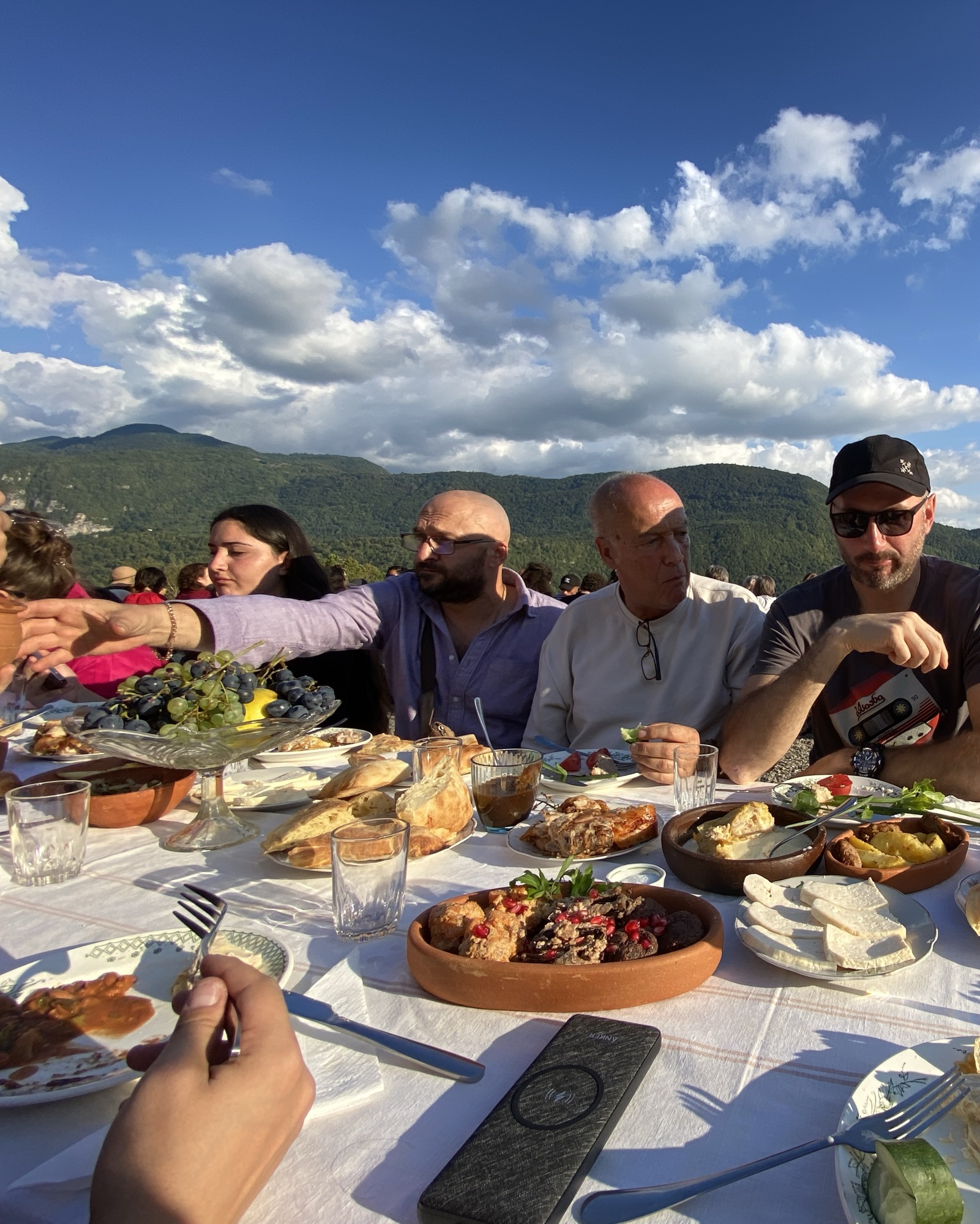
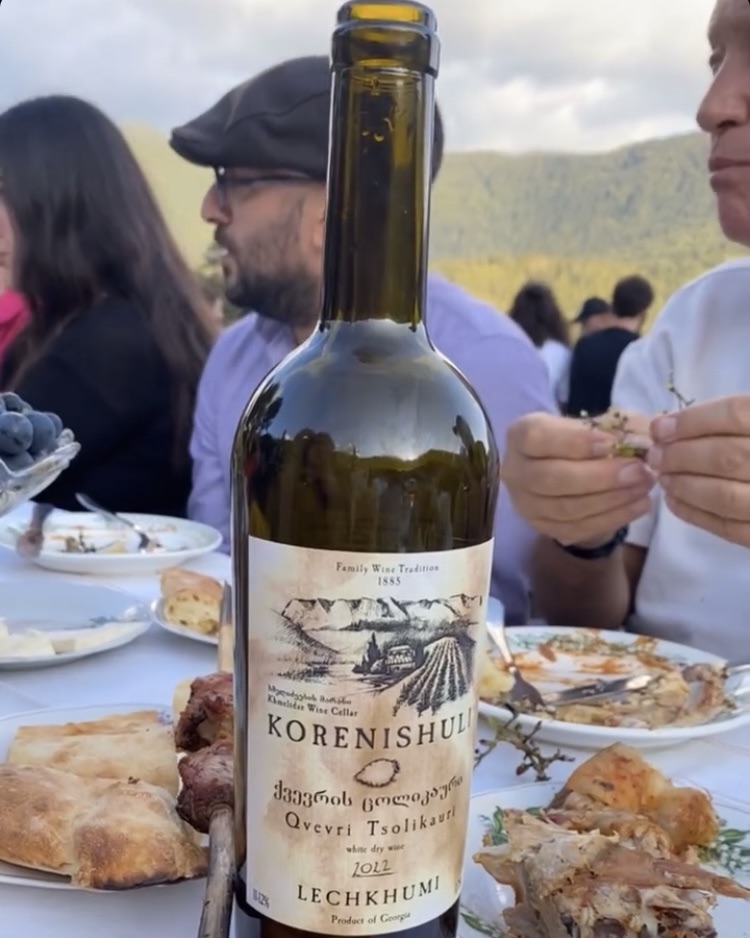
such goood wine! 
Members of the German group Mravalo 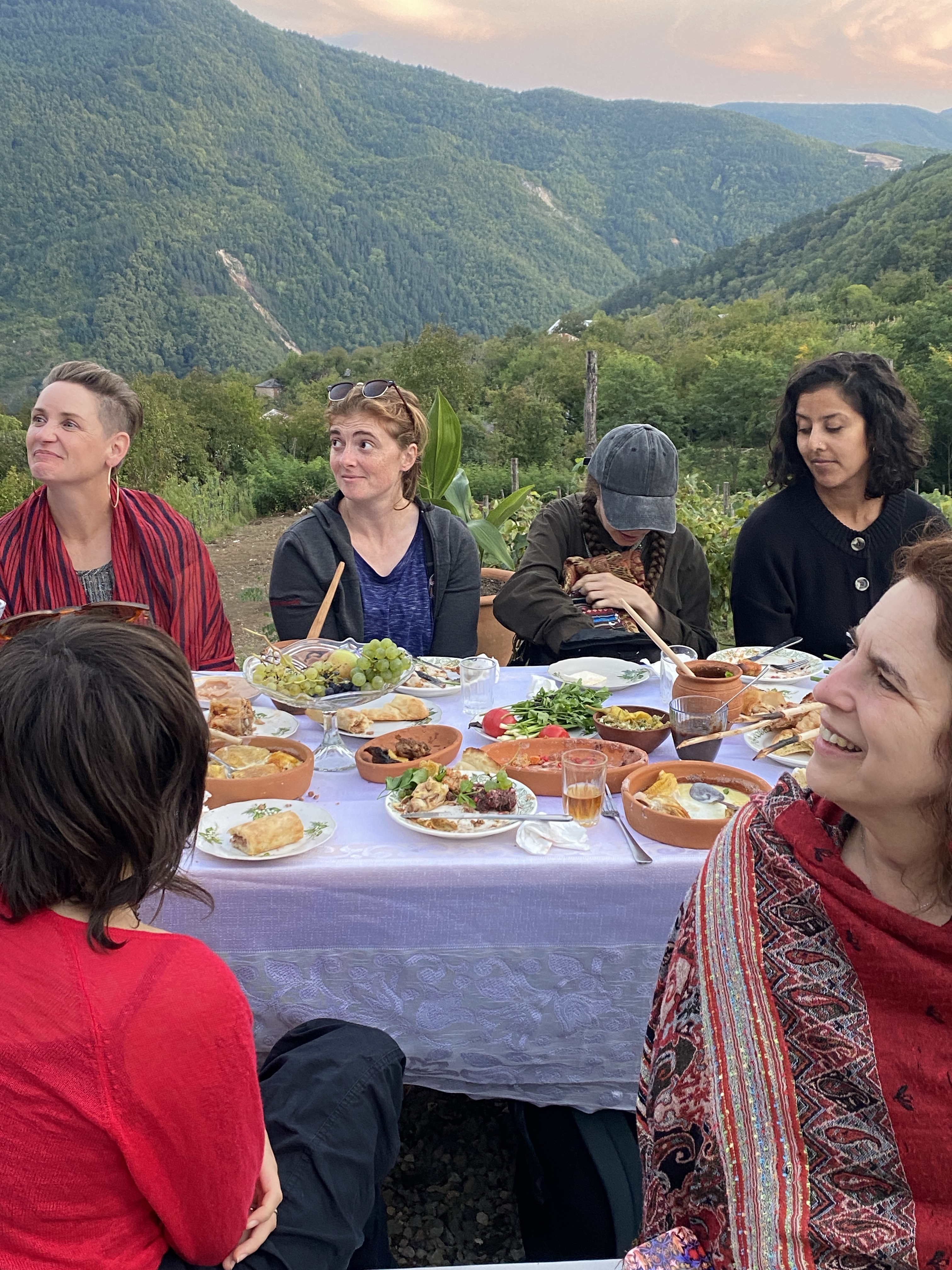
Members of the US group Kitka
A Word About Dziriani: study, friendship…
At the beginning of the international folklore festival we were grouped with a wonderful choir of Rachian Georgian singers called “Dziriani” who shared their songs and drinks with us over the next 3-4 days. Below we talk about what we learned from them but more profoundly than learning the songs, we experienced their warmth, generosity and joy and have made lasting lifelong friendships!
In the days leading up to the performance in Racha, Dziriani taught our group two songs; The first being “Dalie”, a two-choir drinking/celebration song that was perfect for getting us in the Georgian spirit. The second was “Maghla Mtas” which translates to “high mountain”, a tale of a centuries-old battle between the Rachians and the Ossetians. It is also performed in a two-choir formation but this one has a round dance, which they tried teaching us!
Following the concert in Racha we traveled with Dziriani to Lechkumi, which we already mentioned above. Before hitting the road, Iuri (one of the members of the choir) stopped at his mom’s house to pick up a stack of freshly made lobiani and jugs of wine (you can see the pictures of this in the gallery above), and then we were off to the higher mountains. Dziriani sang so much on the ride up that the leader of the group, Tornike Skhiereli, had to urge his choir members multiple times to save their voices for later performances.
After tasting wine and singing even more with all the groups of the festival, Dziriani taught everyone one last song: Raeo, which had all of the groups singing and dancing together on top of that picturesque mountain haven.
Concert Culture
When I talk about concert culture in Georgia, it’s a different perspective. It’s not about the audience’s experience. It’s about the performers. And in Georgia, when you throw so many singers together, you just can’t stop them. Singing results. Lots of singing. Even some dancing. One doesn’t have to wonder whether more singing takes place off than on stage in Georgia – it’s just a fact in Georgia. Take a look at this video, a few hours before the opening concert of Festival Sakartvelo in Ambrolauri, Racha. Or the vids below of what happened backstage at the closing concert of the festival.
And check out these pics to help convey more about the atmosphere around concerts in Georgia.

Gabo and Shalva up front, Polo, a bani from Dziriani, and Leo (from Alilo) during sound check in Ambrolauri 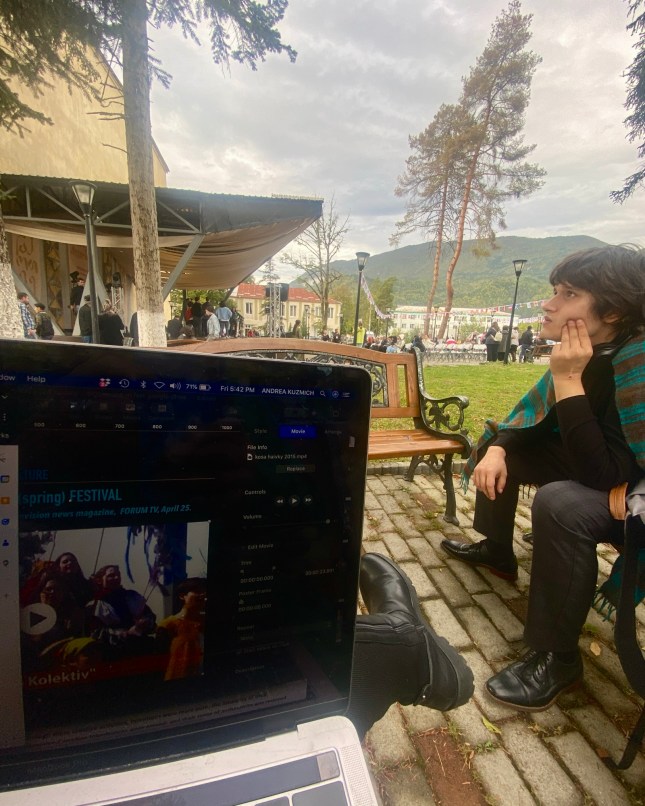
Sound check for 15 ensembles takes a long time so I got some work in on my Symposium paper. 
Organizers Zura and Erekle 
Making the set list 
then sharing the set list as a png to all 
About to perform with Dziriani in Ambrolauri 
Ori Shalva’s performance at the State Folklore Centre 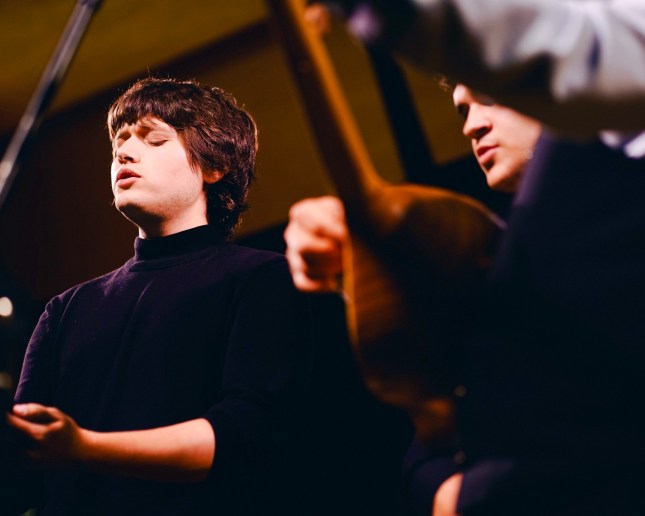

Walking the hall of Rustaveli Theatre 
The performance hall 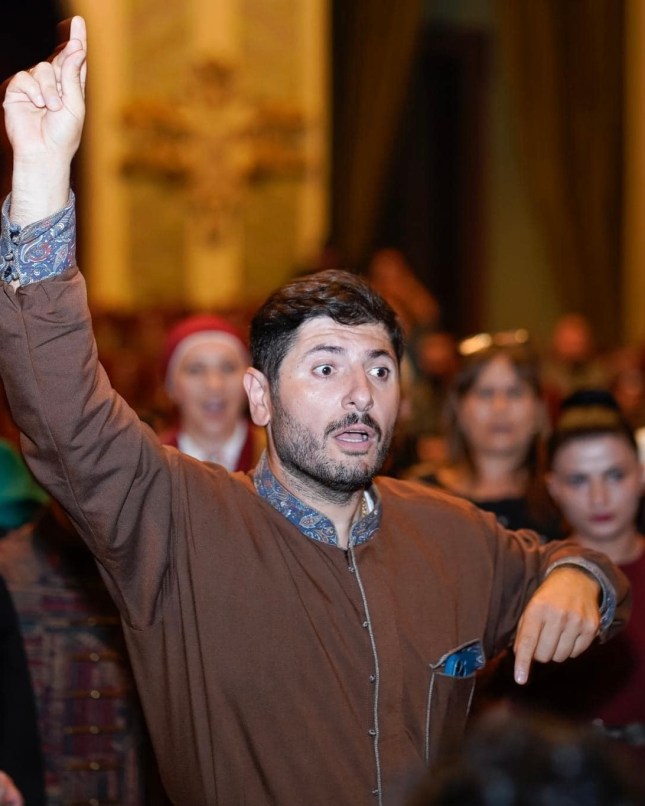
Run through of Raeo with Tornike 
Waiting room – backstage at Rustaveli Theatre 
Tornike’s little girl dancing to Lalkhor and Kitka’s singing backstage, in the “waiting room” at the Rustaveli Theatre 

Dziriani, Ori Shalva (without Big Shalva who was sick) and Alilo 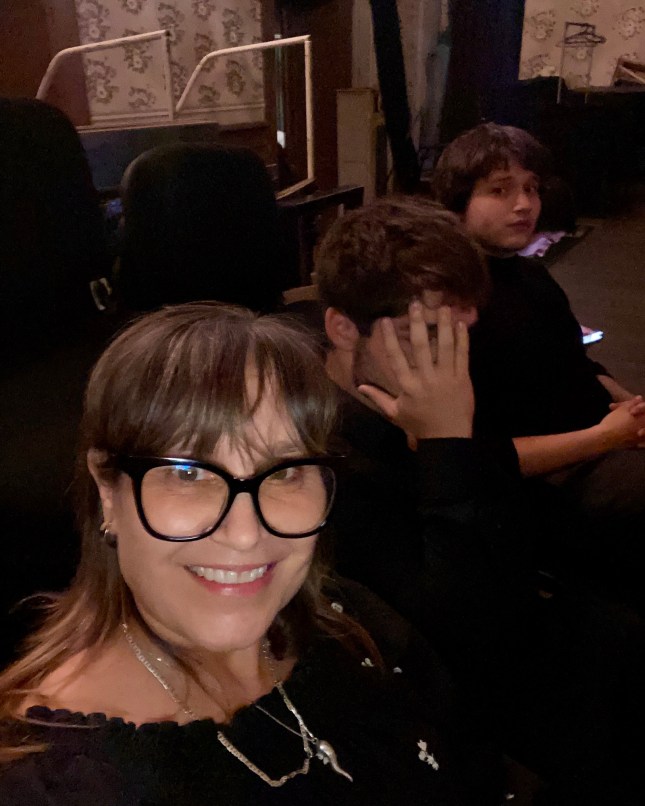
Just before we were about to perform backstage 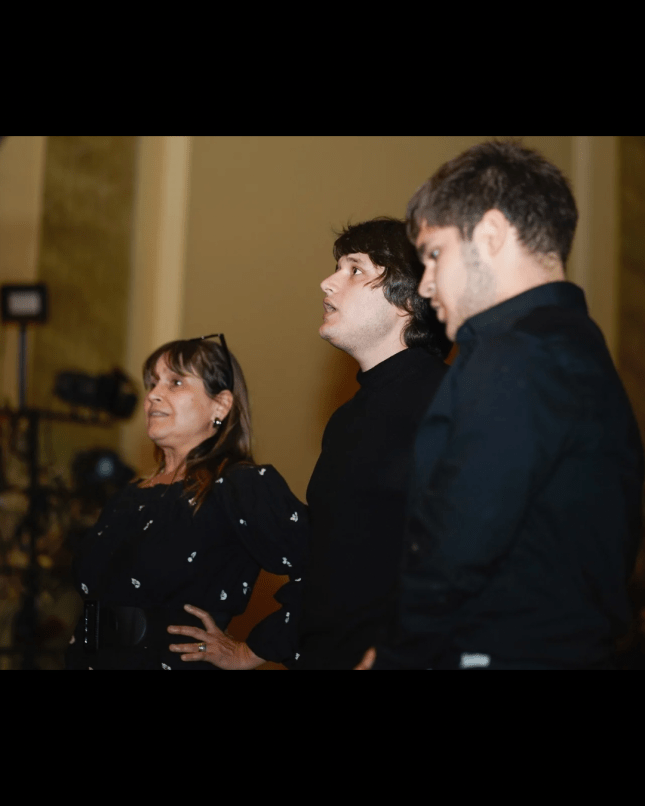


Shalva backstage at the Tbilisi Conservatoire, Opening concert of the Symposium 
Performances & Ensembles
There’s no way we can adequately reflect on all the amazing music we saw. The two festivals (Festival Sakartvelo and the Symposium on Traditional Polyphony) featured an amazing and diverse line up of Georgian performers: like the mixed gendered Svan group Lalkhori; the women’s groups Satanao and Nanina; Mtiebi and Amer-Imeri continuing to thrive as a legacy to the Garaghanidze family; local Svanuri/Rachuli ensembles Lentekhi and Oni; the modern quartet Ranina; various student choirs from different Tbilisi Universities and different regional choirmaster schools; a trio performance featuring Georgia’s oldest surviving Master singer Tristan Sikharulidze; the inspiring and heartwarming Acharian village, song and dance ensemble Mareti; and of course the amazing featured Rachuli ensemble Dziriani.
Buy we also got to connect with a host of old and new singing friends who came to Georgia from all over the world to sing and learn Georgian songs. Most impressive for their humility, warmth and exceptional skills were the American women’s group Kitka and the Latvian ladies Saucējas. The relatively young group Alilo, from France, were also excellent singers and fun musical conspirators. We also developed new friendships with the Welsh women of Samaia and the Germans from Mravalo – an online choir led by one of Georgia’s premier conductors and music educators, Tamar Buadze. And there were so many others, like ethnomusicologists Polo Vallejo (who felt like our new-found-long-lost uncle) and Caroline Bithell, or Scottish singers Madge Bray and French singer Francoise Arnaud-Demir. Of course, our hearts warmed so much to see our long-time British and Australian friends from Maspindzeli and Gorani, some of whom we hadn’t seen for possibly 10 years. And we must say how impressed we were with Maspindzeli’s repertoire and performance! Holly Taylor-Zuntz and Susan Thompson are two other individuals that need mentioning, for their support in documenting and advocating for Georgian polyphony through their project Voices of the Ancestors. And of course we must recognize tireless organizers from the State Folklore Centre and the Research Centre for Traditional Polyphony like Nino Razmadze, Giorgi Donadze, his son Erekle, Zura Tskrialashvili, Givi Abesadze, Ana Lolashvili and countless others who worked so hard and were exceptional hosts.

Of course there were many other performance and ensembles that were amazing, many of which never got recorded. However, if you are interested in checking out more performance videos , visit the Voices of the Ancestors Youtube channel.
Scholarship…
One final note – Andrea, as a scholar, also took part in a few academic presentations.
Andrea presented a paper on the transnational practices of traditional Georgian and Ukrainian polyphony within the dynamic cultural landscape of Toronto. She noted that Georgian polyphony is supported by a small diaspora with limited institutional backing, unlike in Georgia, where it benefits from significant support. In contrast, Ukrainian polyphony in Toronto is bolstered by a well-established diaspora with strong cultural infrastructure but faces challenges due to the tradition’s marginalization in Ukraine.

And at a round table on International Participation in Georgian Traditional Music, Andrea highlighted the lack of recognition for the significant achievements of Georgian polyphony in Canada. She attributed this to the greater distance and financial challenges of accessing Georgia from Canada compared to Europe or the United States and advocated for the international community and Georgians to not forget the work done in Canada.
Thank you!
There really is so much more we would love to share with you but it already took us so long to make this post! But this journey deepened our connection to Georgian music and traditions in unimaginable ways, and we are immensely grateful for the opportunity to represent Canada so meaningfully. Thank you for making this experience possible! We hope you enjoy the photos and videos and invite you to reach out if you have any questions or comments.






 MusiCamp